


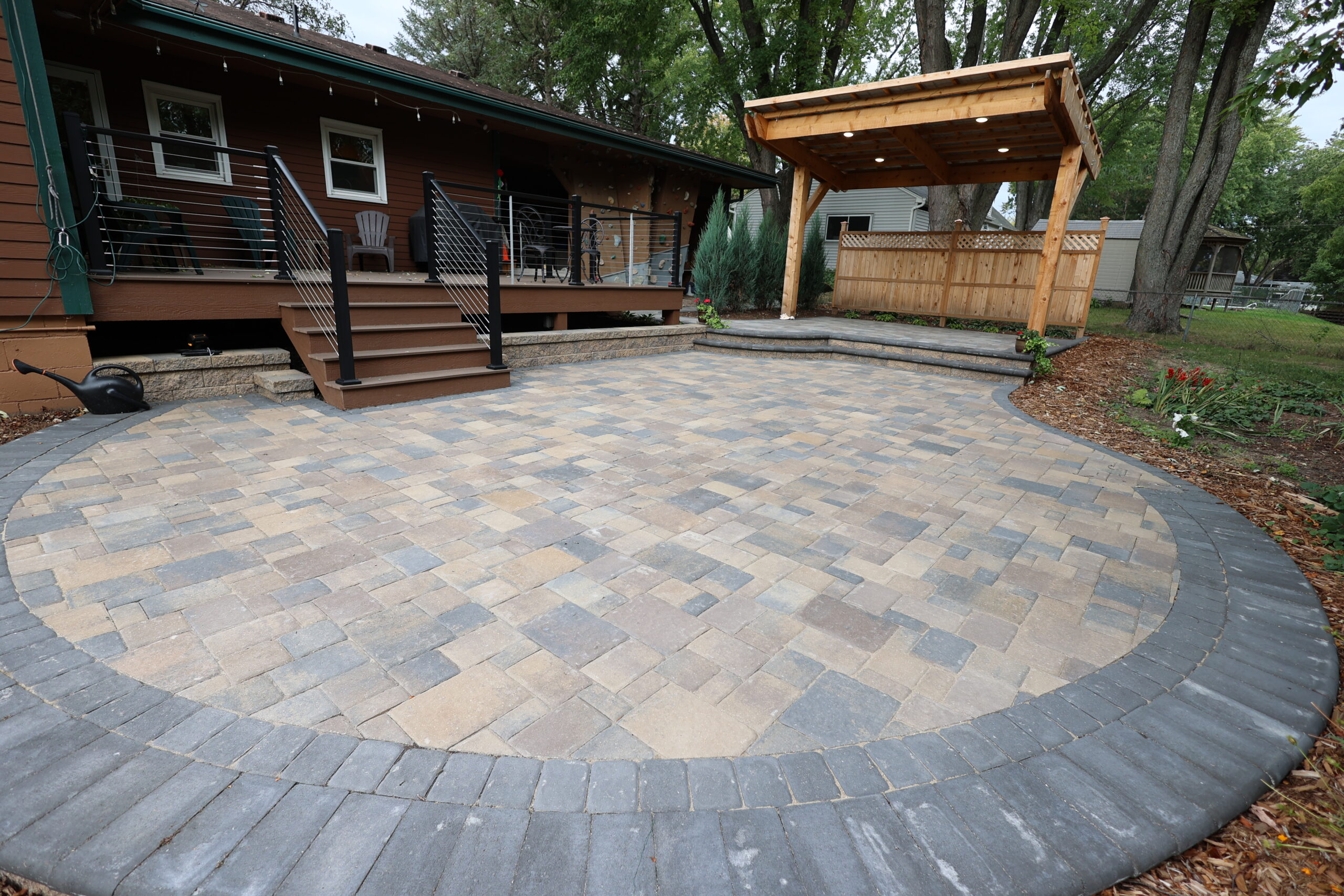
What is the Correct Base Preparation Process for a Paver Patio Installation to Prevent Settling and Movement?
The aesthetic appeal of a Paver Patios & Walkways is instantly recognizable, but the true value of this feature lies beneath the surface. The correct base preparation for a paver patio installation is, without question, the most critical initial setup factor that determines the longevity and durability of your entire outdoor living space. This foundation is what prevents the common failures homeowners fear most—settling, shifting, and water-related movement.
At Villa Landscapes, our professional installation process is focused on creating a perfectly engineered sub-base that guarantees a structurally sound and long-lasting installation that resists the forces of nature, ensuring your pavers remain flat and true for decades.

The Essential Three-Step Base Preparation Process
-
- Correct Depth: The soil is dug out deep enough to accommodate the full depth of the granular aggregate sub-base (typically 6-8 inches), the bedding layer (usually 1 inch of sand), and the thickness of the pavers themselves.
- Positive Drainage: The sub-grade itself must be graded to pitch slightly away from any permanent structures, such as your house or an Outdoor Kitchens island. This ensures water moves away from the patio, preventing it from saturating the base and causing freeze-thaw damage. A proper initial setup factor prevents hydrostatic pressure buildup.

-
- Material Choice: We use high-quality, dense granular aggregate (crushed stone, not rounded gravel) that mechanically locks together when compacted. This material provides the necessary strength and allows water to quickly filter through.
- Layered Compaction: The material is spread in lifts (layers) of no more than 4 inches at a time. Each layer is then subjected to meticulous compaction using a heavy, commercial-grade plate compactor. This process achieves maximum density, eliminating air pockets and creating a rigid, almost concrete-like base.
- Depth: A final compacted depth of 6-8 inches is generally required for pedestrian patios, while higher traffic areas like Paver Driveways or beneath Retaining Walls may require greater depth.
-
- Material Choice: We use high-quality, dense granular aggregate (crushed stone, not rounded gravel) that mechanically locks together when compacted. This material provides the necessary strength and allows water to quickly filter through.
- Layered Compaction: The material is spread in lifts (layers) of no more than 4 inches at a time. Each layer is then subjected to meticulous compaction using a heavy, commercial-grade plate compactor. This process achieves maximum density, eliminating air pockets and creating a rigid, almost concrete-like base.
- Depth: A final compacted depth of 6-8 inches is generally required for pedestrian patios, while higher traffic areas like Paver Driveways or beneath Retaining Walls may require greater depth.
3. Edge Restraints and Bedding Layer (The Lock-In):
The final two components lock the system together and provide the setting bed for the pavers.
-
- Edge Restraints: A rigid, perimeter restraint (typically plastic, metal, or concrete) is installed around the entire edge of the patio and secured into the compacted base with long spikes. This crucial element prevents the lateral movement of the paving stones, which is often the first sign of failure on a non-professionally installed patio.
- Bedding Layer: A uniform 1-inch layer of clean, coarse sand (the bedding layer) is spread over the compacted aggregate base. This layer is then screeded to a perfectly uniform, level plane on which the pavers will be individually set.

The Investment in a Structurally Sound Base
Choosing a professional paver patio installation that focuses on an engineered base saves homeowners from significant maintenance costs down the line. A long-lasting installation is one that:
- Resists Weather: Withstands Minnesota’s seasonal freezing and thawing without lifting or cracking, an essential factor also considered in Natural Stone Patios & Walkways and Foundation Plantings.
- Maintains Aesthetics: Keeps the surface flat, level, and prevents the “wavy” look caused by inadequate compaction or a settling base.
- Simplifies Maintenance: Ensures the paving stones themselves remain tightly interlocked, which reduces weed growth and simplifies general upkeep.
The decision to install a paver patio is an investment in your home. By ensuring the correct base preparation process is followed, you guarantee a beautiful, safe, and truly long-lasting installation of your entire outdoor living space.
Ready to start your custom paver patio installation with a guaranteed structurally sound base? Contact Villa Landscapes today to schedule your initial consultation.