


What are the Most Important Initial Setup Factors for a Long-Lasting Fence Installation?
A fence is a cornerstone of your outdoor living space, providing privacy, security, and defining the boundaries of your property. But a truly long-lasting fence installation is not defined by the pickets or panels you see; its durability is determined by the unseen structural integrity of every post buried in the ground. The most important initial setup factors for a fence installation are non-negotiable engineering principles designed to resist the powerful forces of wind and, critically, the brutal cycle of freezing and thawing common to cold climates.
For a permanent and stable Fence Installation, professional teams focus on three essential ground-level elements:
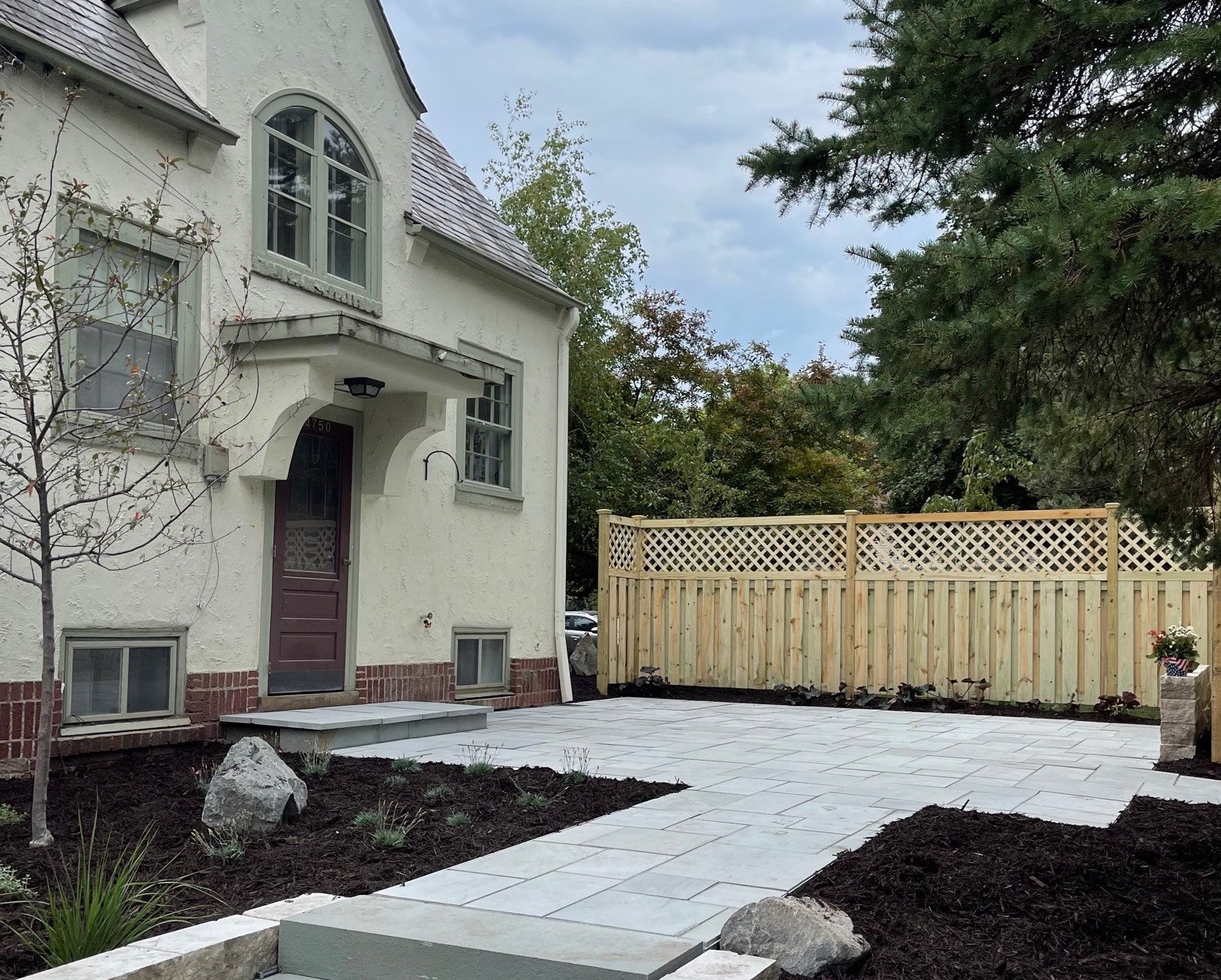
1. The Non-Negotiable: Depth Below the Frost Line
The greatest threat to a fence post’s stability is frost heaving, the same force that compromises improperly set footings for a porch or deck. Frost heaving occurs when water in the soil freezes and expands, pushing anything above the frost line upward.
- The Rule: Posts must be set below the local frost line—a depth that is typically 42 inches in Minnesota.
- The Benefit: Anchoring the post base in soil that never freezes provides a stable, unmoving foundation. This meticulous post installation is a non-negotiable installation factor that prevents the vertical movement that compromises alignment.
- Context: This structural principle is similar to the requirements for a deep foundation footing in Retaining Walls.
2. Post Hole Dimensions: Depth and Diameter
The final hole must be sized to maximize resistance to lateral movement (side-to-side force from wind or impact).
- The Requirement: The depth and diameter of the post holes must be sufficient to accommodate the correct setting material and resist side pressure. The hole should generally be three times the width of the post itself, allowing a thick column of concrete around the wood or metal.
- The Function: This oversized hole ensures the anchoring material transfers the load to a wider soil area, increasing the fence’s ability to withstand high winds and pressure without swaying.

3. The Anchor Material: Secured in Concrete
The choice of backfill is crucial for structural longevity.
- The Method: Posts must be secured in concrete—never merely backfilled with dirt or gravel—to create a rigid, permanent anchor. The concrete should be poured directly around the post, creating a monolithic structure that is impervious to moisture and soil erosion.
- The Placement: Crucially, the concrete should be crowned slightly above ground level. This prevents surface water from pooling around the post, which would accelerate rot at the base of a wooden post.
This meticulous approach provides the structural integrity necessary for a truly long-lasting installation, ensuring your Fence Installation remains perfectly straight, secure, and beautiful for decades.
Ready to secure your custom outdoor living space with a professionally installed, frost-proof fence?
Contact Villa Landscapes today to schedule your initial consultation.