



How Do Professional Lighting Designers Determine the Correct Wattage and Beam Spread for Different Outdoor Features?
The difference between a functional, aesthetically pleasing landscape lighting installation and a yard plagued by harsh shadows or distracting glare lies entirely in precision. Professional lighting designers determine the correct wattage and beam spread by carefully calculating the fixture output required for the desired effect, ensuring every element of your outdoor living space—from the tallest trees to the smallest pathways—is illuminated to perfection. This commitment to precision is a key initial setup factor in the integrated design-build approach used by Villa Landscapes. It moves the process beyond guesswork, preventing over-illumination (“hot spots”) or under-illumination that compromises both the beauty and security of your home.
The Calculation: Matching Fixture Output to the Focal Point
A professional lighting plan starts with the goal: what needs to be illuminated, and for what purpose? The subsequent calculations are highly technical and account for light intensity (wattage), distribution (beam spread), and the absorption rate of the surface being lit.
- Wattage (Intensity): This determines the brightness of the light source. It must be carefully scaled to the size of the object. For instance, up-lighting a tall tree requires significantly higher wattage than lighting a small garden wall. A designer must also consider the ambient light in the surrounding area to ensure the new fixture output does not overpower the natural night sky.
- Beam Spread (Distribution): This dictates the angle at which the light leaves the fixture. It is measured in degrees and is essential for achieving the right effect:
- Narrow Beam (Spot): Used for highlighting specific architectural features, tall trees, or columns. This focus provides dramatic contrast and is ideal for cross-illumination effects.
- Wide Beam (Flood/Wash): Used for soft, general illumination, such as washing a low garden wall, a wide fence line, or illuminating the base of a decorative Water Features.
- Diffused (Path): Used for path lighting a walkway. These fixtures cast a wide, gentle, and downward beam onto a horizontal surface, providing clear visibility and safety without directing harsh glare into a user’s eyes.
Correct Fixture Selection for Structural and Safety Elements
The strategic placement and correct fixture selection are critical during the initial yard setup to enhance both the aesthetic and functional elements of your hardscape.
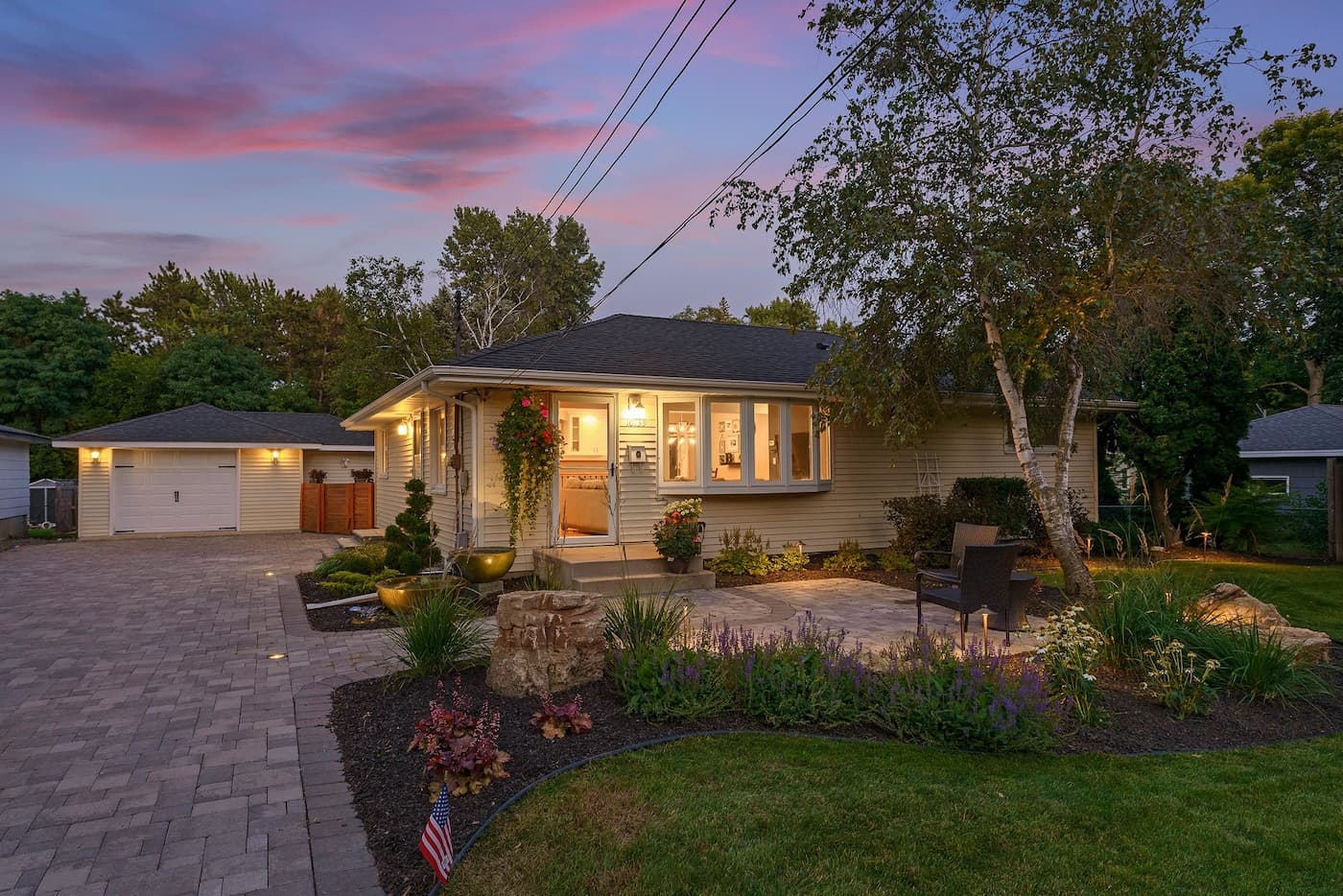
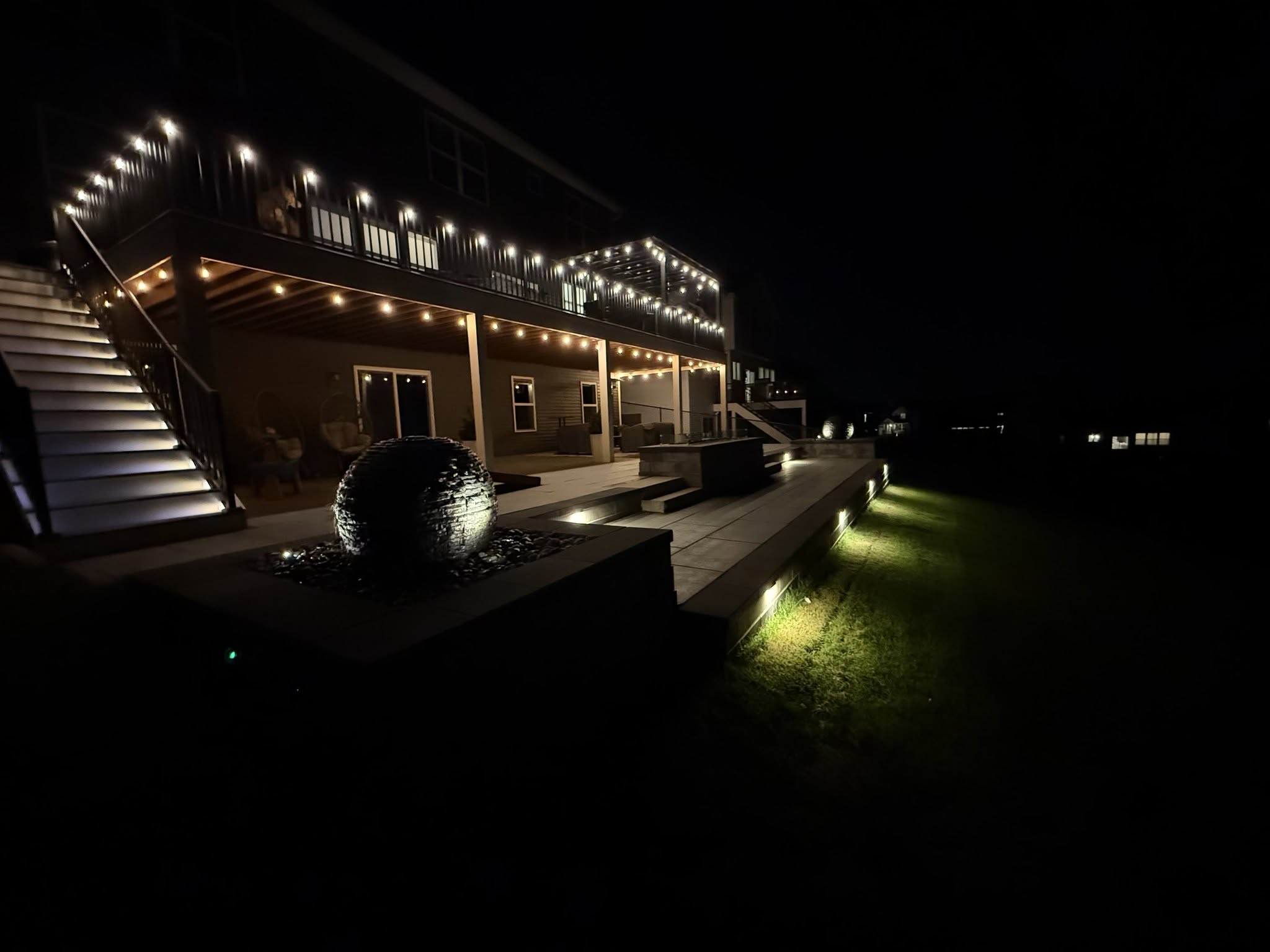
- For Hardscape Features: Elements like a custom-designed Natural Stone Patios & Walkways or an Outdoor Kitchens should use subdued, integrated lighting. Fixtures may be recessed into steps or retaining walls, utilizing low-wattage LED strips with a wide beam spread to provide general, ambient light. This prevents hot spots while guiding foot traffic safely.
- For Trees and Architecture: Up-lighting is used to emphasize the scale and texture of a tree or the stone façade of a home. The designer calculates the fixture distance from the object’s base to ensure the light is evenly distributed up to the canopy or roofline, rather than stopping halfway up.
- For Pathways and Entrances: Path lighting utilizes a narrow, downward-focused beam with a shade (or hat) to ensure the light is purely functional. This technique illuminates the high-traffic area for security but cuts off the light beam above eye-level to prevent glare.
The Design-Build Approach Guarantees Efficiency
By making this rigorous calculation a central initial setup factor, the design-build approach ensures the final landscape lighting installation is achieved with maximum energy efficiency. Choosing the correct wattage prevents unnecessary power consumption, and the targeted beam spread ensures that every lumen of light serves a deliberate purpose—enhancing your home’s curb appeal and security perfectly. This professional planning means your system delivers superior results with minimal long-term energy waste.
Ready to transform your outdoor living space with a precisely designed low-voltage landscape lighting installation?
Contact Villa Landscapes today to schedule your initial consultation.