


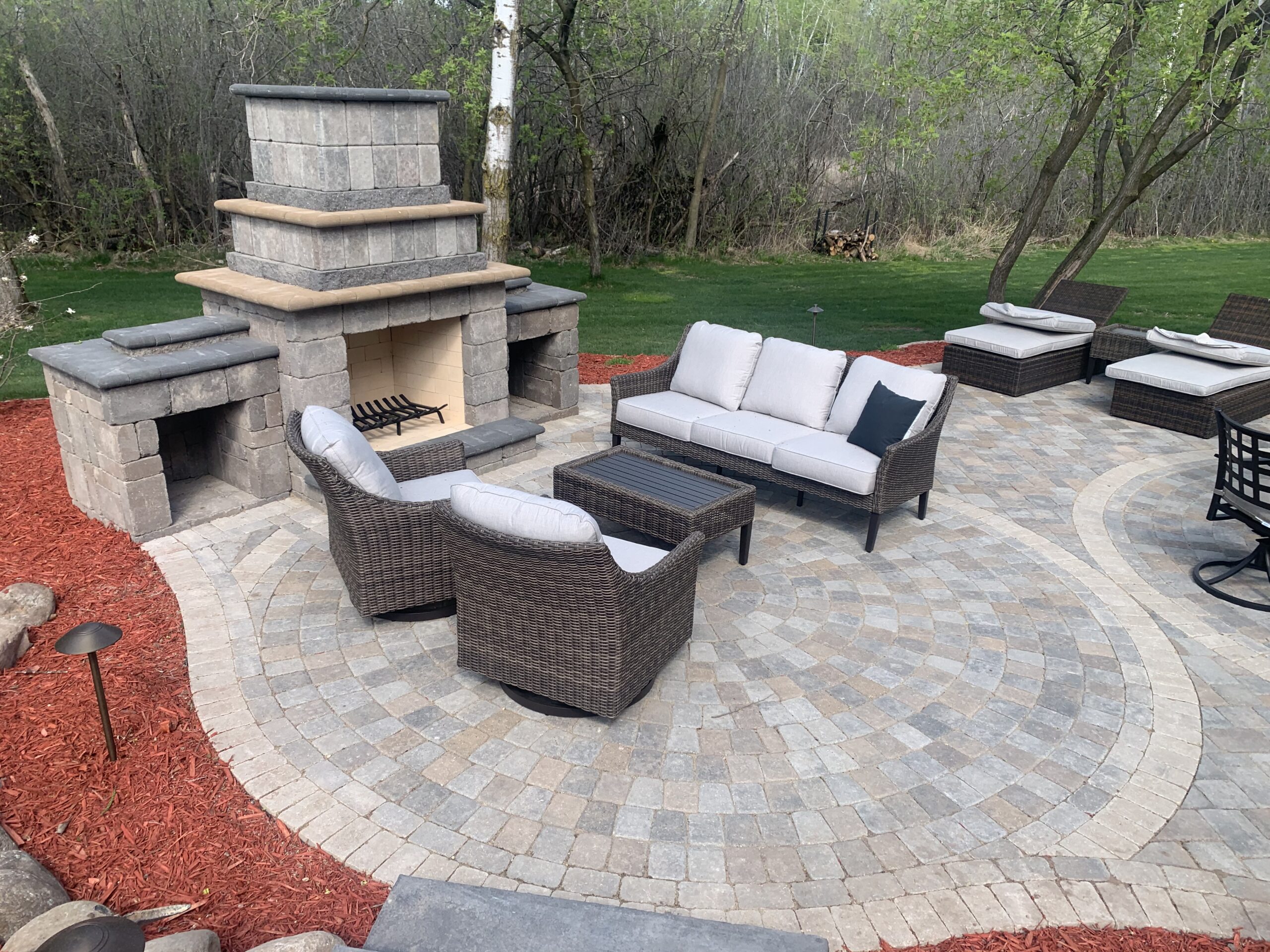
What is the Minimum Required Clearance from Combustible Materials for a Wood-Burning Outdoor Firepit Installation?
A permanent, custom-built wood-burning outdoor firepit installation is the ultimate centerpiece for evening gatherings, providing warmth, ambiance, and a natural gathering spot. However, unlike gas-powered features, a wood-burning fire produces sparks, embers, and intense heat that requires careful management. Because of this, the minimum required clearance from combustible materials is not just a suggestion—it is a vital installation factor dictated by local building codes and a non-negotiable step in the initial setup to guarantee safety and protect your home and Landscape Design investment.
The general industry standard and a rule of thumb for fire safety is maintaining a distance of at least 10 feet from any combustible materials. Villa Landscapes ensures this code is met from the very start.

Identifying Combustible Materials
Understanding what constitutes a “combustible material” is the first step in proper planning. You must establish the 10-foot minimum perimeter from:
- Structures: This includes your house walls, wooden fencing, sheds, and any overhanging eaves or vinyl siding. Heat exposure can cause damage even without direct flame.
- Wooden Decks and Patios: The wood-burning outdoor firepit installation should never be placed directly on a wooden deck. Any adjacent Decks or wooden railings must be well outside the 10-foot radius.
- Overhanging Vegetation: Low-hanging tree branches, dense shrubs, and dry grasses pose a serious risk and must be cleared.
- Fuel Sources: Any stored firewood, propane tanks, or outdoor furniture must also be included within the 10-foot clearance zone.
The Importance of the 10-Foot Rule
This minimum required clearance is established by local building codes for several critical, life-safety reasons:
- Spark and Ember Drift: Wood fires produce embers that can be carried significant distances by wind, easily igniting dry leaves or a wooden structure. Ten feet provides a crucial buffer for these materials to cool or land in a non-combustible area.
- Radiant Heat Damage: Even if no embers reach the material, sustained radiant heat can cause house paint to peel, damage siding, or, in extreme cases, ignite a material through prolonged exposure.
- Structural Integrity: For any permanent Outdoor Firepits & Fireplaces built near a retaining wall or other hardscape, the proper initial setup guarantees the structural integrity of the surrounding features from direct heat.

Designing the Safe Firepit Zone
The design process should always treat the firepit as the focal point of a non-combustible zone.
- Non-Combustible Base: The firepit itself must be situated on a hard, non-combustible surface, such as a Natural Stone Patios & Walkways or a Paver Patios & Walkways. This provides a safe landing zone for stray embers.
- Professional Consultation: A professional landscape designer will include the clearance requirement in the master plan, ensuring the location is safe, compliant, and aesthetically integrated into the overall landscape design.
By making the minimum required clearance an absolute priority during your initial setup, you are taking the most essential step toward a safe, legal, and truly long-lasting installation that you and your family can enjoy without concern.
Ready to design a safe and custom Outdoor Firepits & Fireplaces area?
Contact Villa Landscapes today to schedule your initial consultation.