


Paver Driveways
Block Paver Driveways
Design & Installation
Serving – Oakdale, Lake Elmo, Woodbury, Maple Grove, & Surrounding Areas Of Washington, Hennepin, Scott & Dakota County, Minnesota (MN)


Paver Driveways
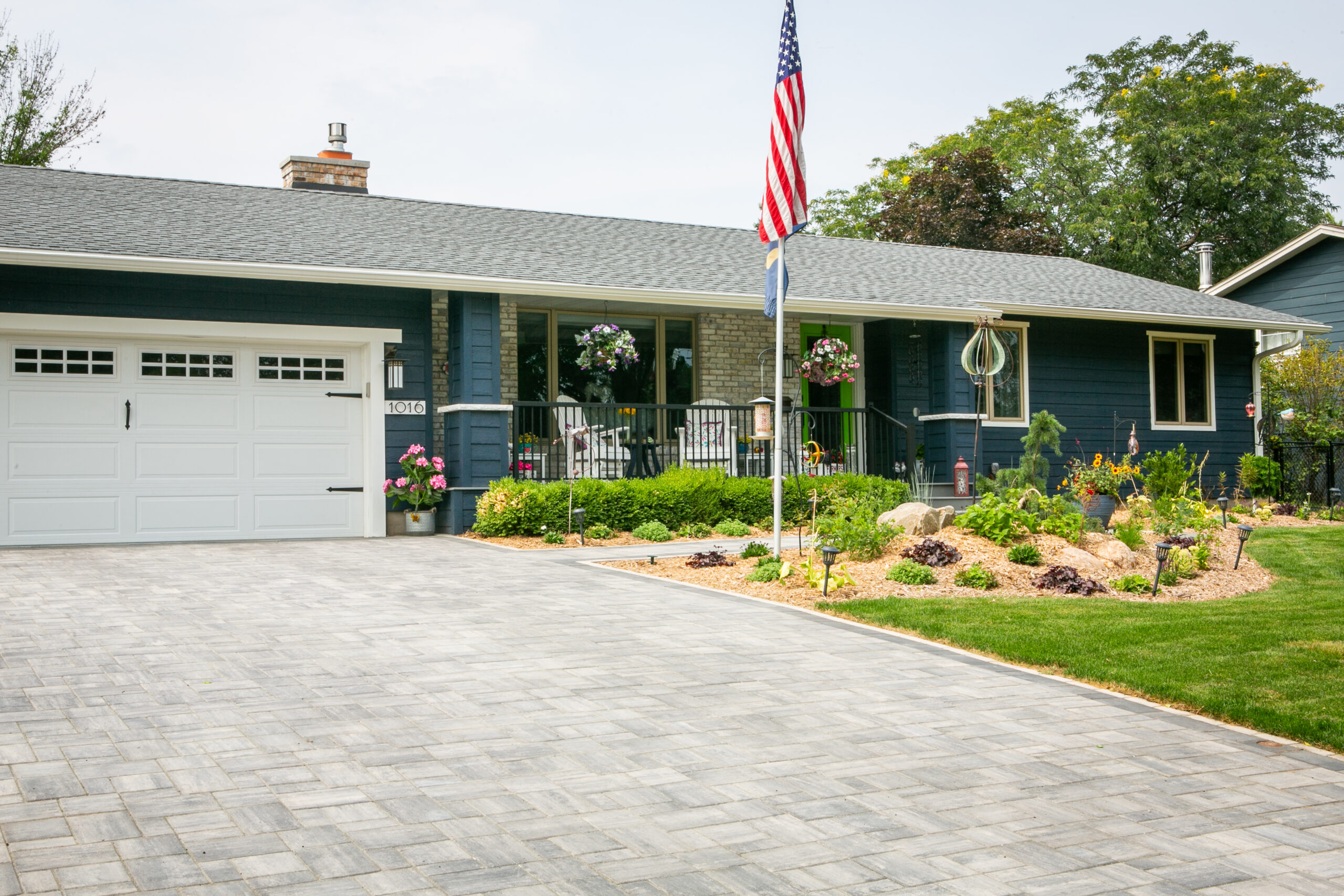
Villa Landscapes specializes in the design and installation of block paver driveways that combine beauty, durability, and functionality. With over 35 years of experience, we create custom driveways that enhance your home’s curb appeal while providing long-lasting performance.

The Benefits of a Paver Driveway vs. Traditional Asphalt or Concrete
Investing in a paver driveway offers several advantages over traditional asphalt or concrete options:
-
Superior Durability: Pavers are designed to withstand heavy loads and Minnesota’s extreme weather conditions, resisting cracks and wear better than asphalt or concrete.
-
Enhanced Aesthetic Appeal: Paver driveways offer a wide range of colors, patterns, and textures, allowing for unique designs that complement your home’s style.
-
Easy Repairs: Individual pavers can be replaced if damaged, unlike concrete or asphalt, which often require extensive and costly repairs.
-
Increased Property Value: A well-designed paver driveway adds visual appeal and increases your home’s market value.
-
Eco-Friendly Options: Permeable pavers help manage stormwater by allowing water to seep through, reducing runoff and promoting environmental sustainability.

Types of Paver Blocks for Driveways
Villa Landscapes offers a variety of paver blocks suitable for driveway installations:
-
Concrete Pavers: Durable and versatile, these pavers come in numerous shapes, sizes, and colors to fit any design.
-
Natural Stone Pavers: For a timeless and elegant look, natural stone options like granite or sandstone provide unmatched beauty and durability.
-
Clay Brick Pavers: A classic choice, clay bricks offer strength and a traditional aesthetic that complements many architectural styles.
-
Permeable Pavers: These environmentally friendly pavers are ideal for reducing water runoff and managing stormwater effectively.
-
Textured or Cobblestone Pavers: For a rustic or old-world charm, these pavers add character and sophistication to your driveway.
Consultation Services
At Villa Landscapes, we ensure every project is tailored to meet your unique needs. Our comprehensive consultation process includes:
-
Onsite Evaluation: Our team visits your property to assess the space, discuss your ideas, and understand your goals.
-
Custom Design Plans: We create detailed designs that reflect your style preferences, budget, and functional needs.
-
Transparent Pricing & Timelines: You’ll receive clear estimates and realistic timelines to ensure a seamless project experience.

Have Questions? We Have Answers!
1. What is the correct base preparation process for a paver driveway installation to withstand heavy vehicle traffic?
The correct base preparation process for a paver driveway installation is a crucial initial setup factor that requires deep excavation—typically 12 to 18 inches—to remove all organic material. A non-negotiable step is the placement and meticulous compaction of an aggregate sub-base in multiple lifts to achieve maximum density. This solid, properly engineered base is essential for distributing the load from heavy vehicle traffic and preventing settling in the paver driveway for a long-lasting installation.
2. How is adequate subsurface drainage engineered into a paver driveway to ensure longevity and prevent shifting?
Adequate subsurface drainage is engineered into the paver driveway installation by using a permeable crushed stone sub-base that allows water to filter through the joints and the base layer. A key installation factor is ensuring the entire sub-base is sloped to direct water laterally to the edge restraints and then off-site. Proper drainage is the most vital initial setup factor to prevent water saturation, freeze-thaw cycles, and the subsequent shifting of the paving stones.
3. What is the correct method for installing paver edge restraints to prevent movement in a paver driveway installation?
The correct method for installing paver edge restraints is to secure a rigid border along the entire perimeter after the pavers have been set but before the jointing sand is swept in. This crucial installation process component uses long, heavy-duty spikes anchored into the compacted sub-base to prevent the lateral movement of the paving stones under the stress of vehicle traffic. This is a non-negotiable initial setup factor for locking the paver driveway system in place against erosion and shifting.
4. Which type of paver is best suited for a driveway application to handle continuous heavy loads and minimize cracking?
For a driveway application, the best pavers are interlocking concrete paving stones with a minimum thickness of 80mm (approximately 3.125 inches) and high PSI compressive strength. Pavers designed with chamfered edges are key installation factors because they resist chipping and wear from tire friction. Selecting these heavy-duty pavers is fundamental to a long-lasting installation that can handle continuous heavy loads without cracking or degrading.
5. What joint material should be used on a paver driveway to resist washout from rain and traffic and deter weed growth?
The ideal joint material for a paver driveway installation is a high-performance, commercial-grade polymeric sand. This material is swept into the paver joints and hardens to form a durable, semi-flexible bond. As a vital installation process factor, it effectively resists washout from rain, prevents sand erosion caused by power washing, and strongly deters weed seeds and ant infestation, contributing significantly to the driveway’s long-lasting installation.
6. How do professionals ensure the driveway pitch directs water away from the house and garage during installation?
Professionals ensure the paver driveway pitch directs water away from structures by establishing a minimum surface slope of 1/8 to 1/4 inch per linear foot from the garage or home during the initial setup and base compaction. Utilizing a laser level and string lines, the installation process meticulously grades the sub-base and bedding sand to maintain this precise, consistent slope. This is a critical installation factor to protect the house foundation from water damage.
7. What are the proper steps for integrating the paver driveway with an existing concrete garage apron or street curb?
Integrating the paver driveway with an existing concrete garage apron or street curb requires proper expansion joints and precise cutting. This key initial setup factor involves leaving a small gap (expansion joint) between the concrete and the first row of pavers, often sealed with a flexible sealant. The pavers nearest the curb are cut with a diamond-blade saw to match the exact curve or edge, ensuring a clean, stable, and long-lasting installation transition.
8. What is the importance of using a separation or filter fabric beneath the aggregate base of a paver driveway?
The importance of using a geotextile separation fabric is to prevent the underlying, fine-grained sub-soil from migrating upwards and contaminating the clean, porous aggregate base. This is a vital initial setup factor that maintains the integrity and drainage capability of the sub-base layer. This separation prevents long-term base failure, ensuring the structural stability and long-lasting installation of the paver driveway.
9. How does final compaction with a plate compactor complete the paver driveway installation process?
Final compaction with a vibratory plate compactor is the final, essential step in the paver driveway installation process. This is performed over the newly laid pavers and bedding sand to achieve two goals: seating the pavers firmly into the bedding layer and vibrating the jointing sand into the gaps. This final pass, a key installation factor, locks the entire interlocking system together, maximizing the surface strength for a durable, long-lasting installation.
10. Is a paver driveway installation more environmentally friendly or sustainable than poured concrete?
Yes, a paver driveway installation can be more environmentally friendly, especially if permeable pavers are used. Permeable pavers are designed to allow rainwater to filter through the joints and sub-base into the ground, which is a key installation factor that reduces surface runoff and recharges groundwater. This sustainable approach to the initial setup helps manage stormwater and minimizes the impact on local drainage systems.
Service Areas
Villa Landscapes proudly serves Oakdale, Lake Elmo, Woodbury, Maple Grove, & Surrounding Areas Of Washington, Hennepin, Scott & Dakota County, Minnesota (MN).
Upgrade Your Driveway with Villa Landscapes
Elevate your home’s exterior with a professionally designed and installed paver driveway from Villa Landscapes. Contact us today to schedule your consultation and start creating a driveway that combines lasting performance with stunning curb appeal.


Serving: Oakdale, Lake Elmo, Woodbury, Maple Grove, and Surrounding Areas Of Washington, Hennepin, Scott & Dakota County, Minnesota (MN)
Contact us if you don't see your area listed below
Hennepin County: Bloomington, Brooklyn Park, Champlin, Chanhassen, Corcoran, Crystal, Dayton, Deep Haven, Eden Prairie, Excelsior, Golden Valley, Greenfield, Greenwood, Hanover, Hopkins, Independence, Long Lake, Maple Grove, Medina, Minneapolis, Minnetonka, Mound, New Hope, Orono, Osseo, Plymouth, Richfield, Rockford, Shorewood Spring Park Tonka Bay, Wayzata, Woodland
Dakota County: Castle Rock, Apple Valley, Burnsville, Coates, Eagan, Empire, Farmington, Hampton, Hastings, Lakeville, Lilydale, Mendota, Miesville, New Trier, Northfield, Randolph, Rosemount, Sunfish Lake, Vermillion, Eureka, Greenvale, Ravenna, Sciota, Waterford
Washington County: Afton, Bayport, Cottage Grove, Forrest Lake, Hugo, Lake Elmo, Lakeland, Newport, Saint Paul, Scandia, Stillwater, Willernie
Scott County: Belle Plain, Elko, Jordan. New Prague, Prior Lake, Savage, Shakopee
Carver County: Chanhassen, Chasaka, Cologne, Hamburg, Mayer, New Germany, Norwood, Victoria, Waconia, Watertown