


Paver Patios & Walkways
Paver Patios & Walkways
Design & Installation
Serving – Oakdale, Lake Elmo, Woodbury, Maple Grove, & Surrounding Areas Of Washington, Hennepin, Scott & Dakota County, Minnesota (MN)


Paver Patios & Walkways
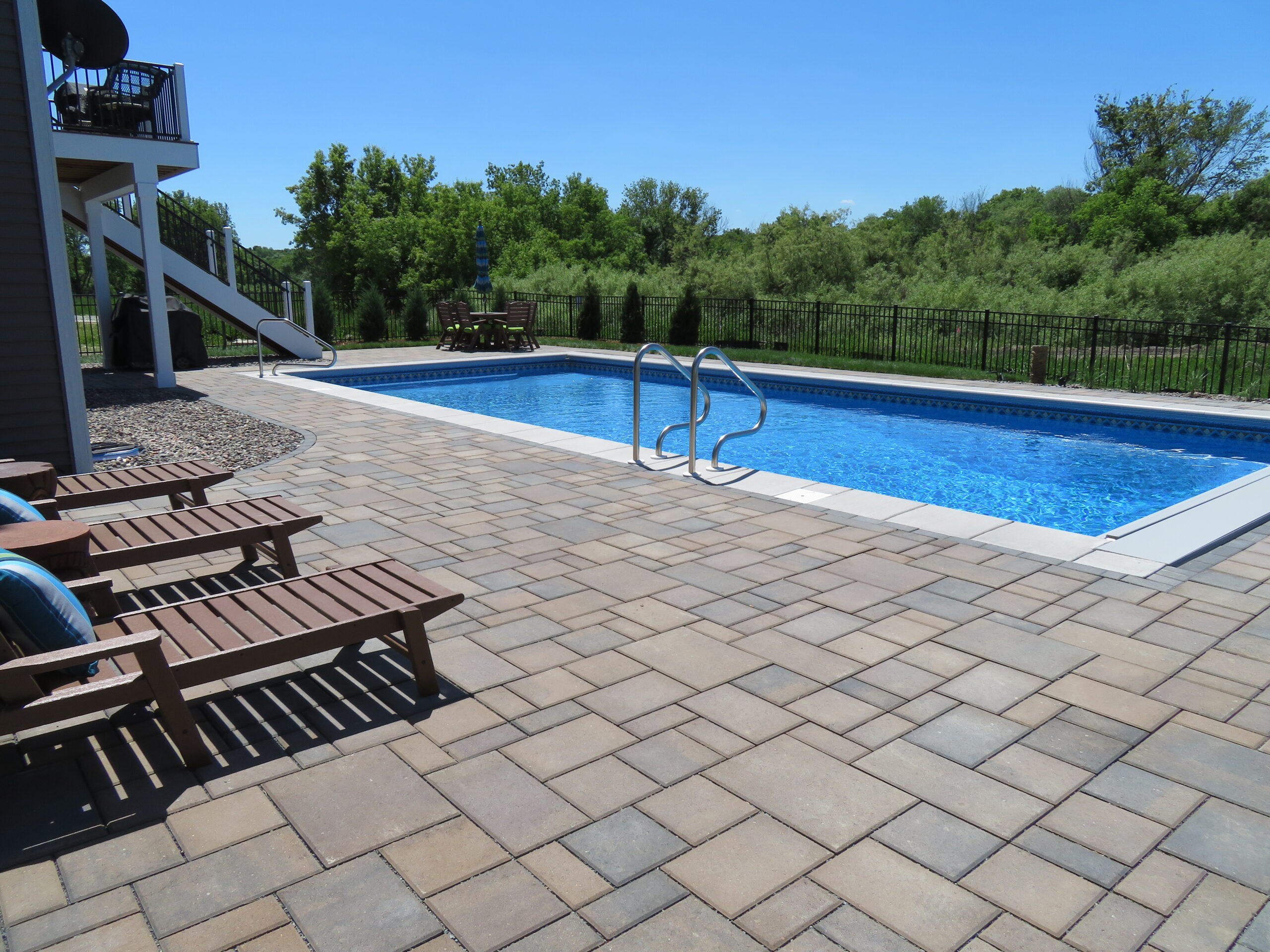
At Villa Landscapes, we specialize in the design and installation of stunning paver patios and walkways that enhance the beauty and functionality of your outdoor spaces. With over 35 years of experience, our team has transformed countless properties across Minnesota with expertly crafted hardscapes that stand the test of time.

The Benefits of Block Pavers vs. Traditional Cement
Choosing block pavers over traditional cement offers several advantages:
-
Durability: Block pavers are designed to withstand Minnesota’s harsh weather conditions, offering superior resistance to cracking and wear.
-
Aesthetic Appeal: With a wide variety of colors, shapes, and textures, pavers provide endless design possibilities to complement your home’s style.
-
Repair Flexibility: Individual pavers can be replaced if damaged, unlike cement, which requires costly and time-consuming repairs.
-
Eco-Friendly Options: Permeable pavers allow water to filter through, reducing runoff and promoting groundwater recharge.
-
Increased Property Value: Paver patios and walkways add curb appeal and boost your home’s resale value.

Types of Block Pavers Available
Villa Landscapes offers a diverse selection of block pavers to suit any design preference:
-
Concrete Pavers: Affordable and versatile, these pavers are available in a variety of shapes, sizes, and colors.
-
Natural Stone Pavers: Elegant and timeless, natural stone pavers like bluestone and flagstone bring a luxurious touch to your outdoor spaces.
-
Clay Brick Pavers: Classic and durable, clay bricks offer a traditional look that complements both modern and historic homes.
-
Permeable Pavers: Environmentally friendly and practical, these pavers help manage stormwater and reduce flooding risks.
-
Textured or Tumbled Pavers: For a rustic or weathered appearance, these pavers add character and charm.
Consultation Services
At Villa Landscapes, we prioritize your vision and satisfaction. Our consultation process ensures a seamless project experience:
-
Onsite Consultation: Our team will visit your property to assess the space, discuss your ideas, and understand your goals.
-
Custom Design Plans: We create personalized designs tailored to your style, budget, and timeline.
-
Clear Estimates: Transparent pricing and detailed project timelines ensure there are no surprises.

Have Questions? We Have Answers!
1. What is the correct base preparation process for a paver patio installation to prevent settling and movement?
The correct base preparation for a paver patio installation is a critical initial setup factor that involves careful excavation and the meticulous compaction of a granular aggregate sub-base, typically 6-8 inches deep. This properly graded and compacted base prevents future settling and shifting of the paving stones, which is essential for a structurally sound and long-lasting installation of the entire outdoor living space.
2. How do professionals ensure proper drainage is factored into a paver patio installation?
Professionals ensure proper paver patio drainage by establishing a slope of 1/8 to 1/4 inch per foot away from the house or structures during the initial setup. This deliberate pitch is a vital installation factor that guides surface water runoff. For increased efficiency, a specialized, coarse bedding sand is used to allow water to filter through the joints and base, preventing water pooling on the paver walkways surface.
3. What is the correct method for installing paver edge restraints to prevent movement in a paver driveway installation?
The correct method for installing paver edge restraints is to secure a rigid or flexible border along the entire perimeter after the pavers have been set. This crucial installation process component prevents the lateral movement of the paving stones under the stress of vehicle traffic. The plastic or metal edge restraint should be anchored into the compacted sub-base with long, heavy-duty spikes to lock the paver driveway system in place, completing the initial setup against erosion and shifting.
4. What is the best joint material to use for a new paver patio installation to inhibit weed growth and stabilize the stones?
The best joint material for a new paver patio installation is polymeric sand, which is a specialized mixture of fine sand and polymer additives. This material is swept into the paver joints and activated with water, causing it to harden. This forms a flexible, durable bond that effectively inhibits weed growth, deters insects, and locks the stones together for a stronger, more long-lasting installation.
5. How is the final bedding sand layer properly leveled and screened for a smooth paver patio surface?
The final bedding sand layer (typically 1 inch deep) is properly leveled by setting temporary screed rails onto the compacted base and drawing a long, straight board (screed board) across them. This installation process creates a perfectly uniform surface, which is a key initial setup factor to ensure the pavers lie flat. This meticulous screening is essential to avoid humps or depressions that could compromise the smooth, safe finish of the paver patio.
6. What are the key installation factors for seamlessly integrating a paver patio with an adjacent lawn or garden?
The key installation factors for integrating a paver patio with an adjacent lawn involve placing a robust, hidden edge restraint around the entire perimeter to lock the stones in place. The professional installation process then includes carefully grading the surrounding soil or mulch up to the top of the edging. This creates a neat, finished transition that allows the paver surface to seamlessly blend into the surrounding landscape design.
7. How does a professional installation ensure a paver pool deck remains cool and slip-resistant?
A professional paver pool deck installation ensures a cool and slip-resistant surface by selecting lighter-colored, textured pavers and sealing them with a non-slip additive. This is a crucial installation factor in the initial setup to reflect sunlight and provide necessary traction for safety around water. Additionally, the installation process is designed for superior drainage, quickly moving water off the surface to keep the area dry.
8. What is the importance of a construction fabric or geotextile during the base preparation for paver walkways?
The importance of using a geotextile fabric during the base preparation for paver walkways is significant, as it acts as a separator and filter. This is a vital initial setup factor that prevents the underlying sub-soil from mixing with and contaminating the clean, compacted aggregate base. This separation dramatically increases the structural integrity and longevity of the walkway, preventing long-term settling and movement.
9. What are the recommended paver sealing best practices for long-term color protection and surface durability?
The recommended paver sealing best practices involve applying a high-quality, breathable sealant after the initial cure of the polymeric sand, typically 28 to 30 days after the installation process. This vital installation factor protects the pavers from UV fading, staining from spills, and surface erosion. Proper sealing is a key step in the initial setup for ensuring a durable and long-lasting installation that maintains its color.
10. How do installation teams plan for cut pavers and borders to achieve a clean, professional edge on a patio?
Installation teams plan for cut pavers and borders by first establishing a design layout that minimizes irregular cuts, utilizing full stones for the majority of the field. All necessary cuts are then made with a diamond-blade saw to ensure clean, precise edges. This attention to detail in the installation process is a key installation factor that achieves a tight, professional-looking perimeter and elevates the overall quality of the paver patios and walkways.
Service Areas
Villa Landscapes proudly serves Oakdale, Lake Elmo, Woodbury, Maple Grove, & Surrounding Areas Of Washington, Hennepin, Scott & Dakota County, Minnesota (MN).
Transform Your Outdoor Space with Villa Landscapes
Elevate your home’s exterior with professionally designed and installed paver patios and walkways. Contact Villa Landscapes today to schedule your consultation and start creating the outdoor space of your dreams.


Serving: Oakdale, Lake Elmo, Woodbury, Maple Grove, and Surrounding Areas Of Washington, Hennepin, Scott & Dakota County, Minnesota (MN)
Contact us if you don't see your area listed below
Hennepin County: Bloomington, Brooklyn Park, Champlin, Chanhassen, Corcoran, Crystal, Dayton, Deep Haven, Eden Prairie, Excelsior, Golden Valley, Greenfield, Greenwood, Hanover, Hopkins, Independence, Long Lake, Maple Grove, Medina, Minneapolis, Minnetonka, Mound, New Hope, Orono, Osseo, Plymouth, Richfield, Rockford, Shorewood Spring Park Tonka Bay, Wayzata, Woodland
Dakota County: Castle Rock, Apple Valley, Burnsville, Coates, Eagan, Empire, Farmington, Hampton, Hastings, Lakeville, Lilydale, Mendota, Miesville, New Trier, Northfield, Randolph, Rosemount, Sunfish Lake, Vermillion, Eureka, Greenvale, Ravenna, Sciota, Waterford
Washington County: Afton, Bayport, Cottage Grove, Forrest Lake, Hugo, Lake Elmo, Lakeland, Newport, Saint Paul, Scandia, Stillwater, Willernie
Scott County: Belle Plain, Elko, Jordan. New Prague, Prior Lake, Savage, Shakopee
Carver County: Chanhassen, Chasaka, Cologne, Hamburg, Mayer, New Germany, Norwood, Victoria, Waconia, Watertown