


What are the Most Important Initial Setup Factors for a Paver Pool Deck to Prevent Sinking or Shifting Over Time?
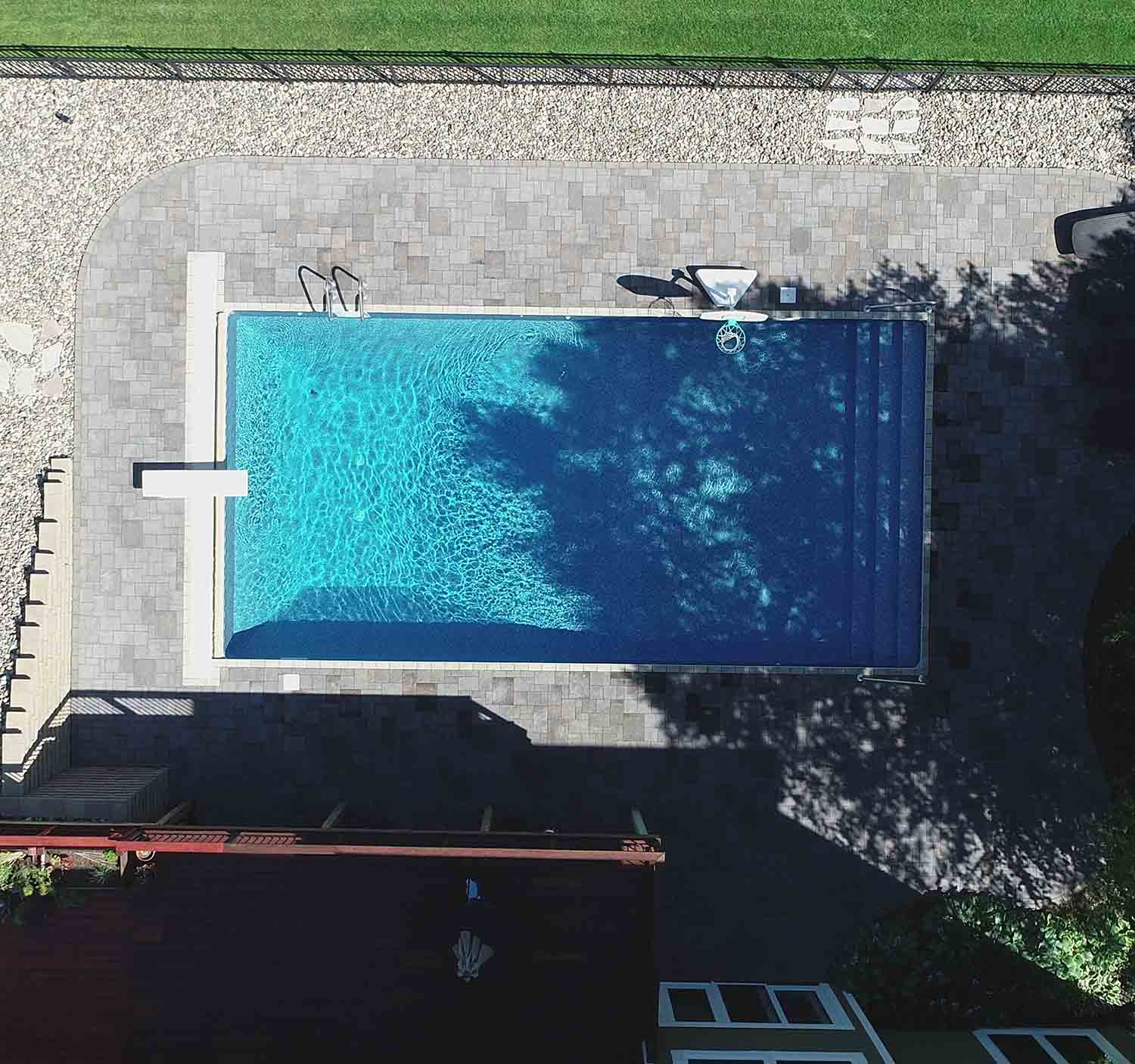
A Paver Pool Deck Installation is a significant investment in your outdoor living space. Unlike a simple walkway, a pool deck is constantly subjected to a unique combination of stresses: heavy foot traffic, chlorine or saltwater exposure, and the inevitable saturation from water splashing. If the foundation is compromised, the pavers will begin to shift, sink, and create dangerous trip hazards.
The most important initial setup factors to prevent sinking or shifting are entirely hidden beneath the surface, focusing on the meticulous preparation of the foundational layers. This structural work is a non-negotiable part of the paver pool deck construction process, ensuring a stable and long-lasting installation.
The Core Solution: An Engineered Foundation
The integrity of your pool deck relies on a thick, dense sub-base that resists moisture and provides maximum load stress distribution. This is achieved through a critical two-step process:
- Deep Excavation and Removal of Organic Soil
- Goal: To remove all soft, moisture-retaining organic material (topsoil and roots) down to the firm, stable sub-grade. Organic material expands and contracts too much, causing instability.
- Depth: Professionals ensure a deep excavation to accommodate the thick aggregate base and the pavers themselves.
- Meticulous Compaction of a Deep, Granular Aggregate Sub-Base
- Material: A granular aggregate sub-base (crushed stone, not rounded gravel) is imported and installed in thin layers (lifts). This material locks together when compacted, creating a dense, rigid layer that acts as the primary load-bearing structure.
- Technique: Meticulous compaction must be performed on each layer using a heavy, commercial-grade plate compactor. This process achieves maximum density, eliminating air pockets and preventing the base from settling under the deck’s weight or the pressure of pool maintenance equipment.
- Dimension: This base is typically installed to a depth of 6–8 inches to provide the necessary support for the Swimming Pool Installation environment.
Secondary Factors for Long-Term Stability
Beyond the foundation, a professional Paver Pool Decks design incorporates secondary structural components that contribute to its long-lasting installation:
- Superior Drainage: The entire deck surface and sub-base are correctly graded with a deliberate pitch (slope) away from the pool edge and the house foundation. This controlled pitch is critical to move water quickly off the surface and prevent the base from becoming saturated, which is the leading cause of shifting in freeze-thaw climates.
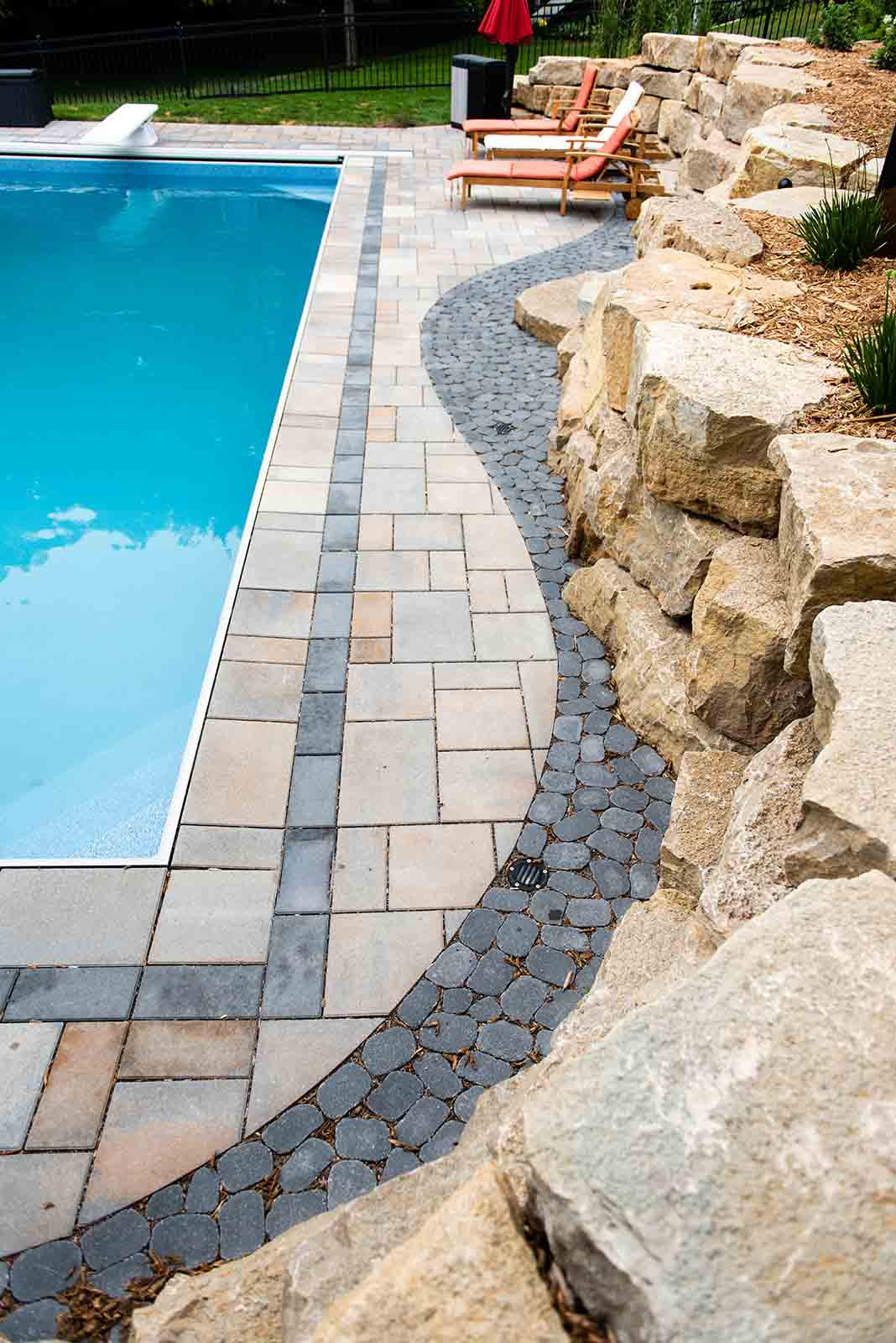
- Edge Restraint: A robust, rigid paver edge restraint is secured around the entire perimeter of the deck. This component locks the entire paver field together, preventing the lateral movement of the paving stones that occurs from foot traffic and ground pressure. This is essential, especially where the deck meets an adjacent Paver Patio & Walkway or a Retaining Wall feature.
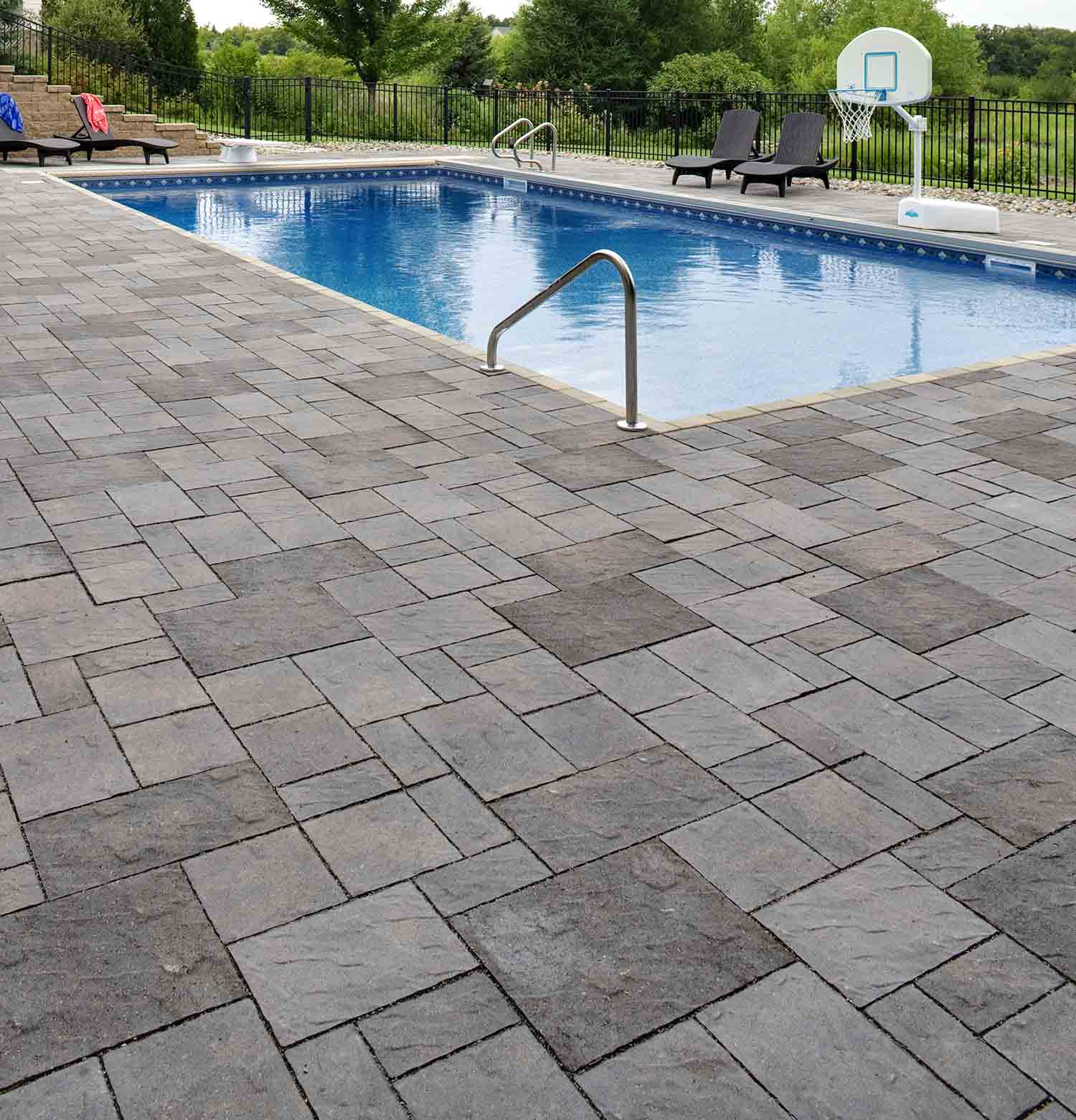
- Joint Stabilization: The paver joints are filled with high-performance polymeric sand, which hardens when wet. This creates a durable, semi-rigid bond that further stabilizes the stones and prevents the erosion of the bedding sand, thus protecting the deck from ant infestation and weed growth.
Secondary Factors for Long-Term Stability
Beyond the foundation, a professional Paver Pool Decks design incorporates secondary structural components that contribute to its long-lasting installation:
- Superior Drainage: The entire deck surface and sub-base are correctly graded with a deliberate pitch (slope) away from the pool edge and the house foundation. This controlled pitch is critical to move water quickly off the surface and prevent the base from becoming saturated, which is the leading cause of shifting in freeze-thaw climates.
- Edge Restraint: A robust, rigid paver edge restraint is secured around the entire perimeter of the deck. This component locks the entire paver field together, preventing the lateral movement of the paving stones that occurs from foot traffic and ground pressure. This is essential, especially where the deck meets an adjacent Paver Patio & Walkway or a Retaining Wall feature.
- Joint Stabilization: The paver joints are filled with high-performance polymeric sand, which hardens when wet. This creates a durable, semi-rigid bond that further stabilizes the stones and prevents the erosion of the bedding sand, thus protecting the deck from ant infestation and weed growth.
By integrating deep excavation, heavy compaction, and a comprehensive drainage strategy, the paver pool deck construction process provides a stable foundation that resists moisture and load stress, ensuring a surface that is safe, level, and beautiful for decades.
Ready to design your custom Paver Pool Deck with a guaranteed long-lasting installation?
Contact Villa Landscapes today to schedule your initial consultation.