


How is Superior Water Drainage Managed During the Initial Setup of a Paver Pool Deck Installation?
The area surrounding your pool is a demanding environment. It’s subject to continuous splashing, heavy rain, and the constant flow of water from swimmers entering and exiting. For a Paver Pool Deck Installation to remain safe, beautiful, and structurally sound for decades, superior water drainage must be engineered into the system from the very beginning. This is a non-negotiable initial setup factor that separates a durable, long-lasting installation from a deck that is prone to settling, joint erosion, and dangerous standing water.
Professional teams manage drainage through a dual-action system that controls both the water running over the pavers and the water that filters through them.
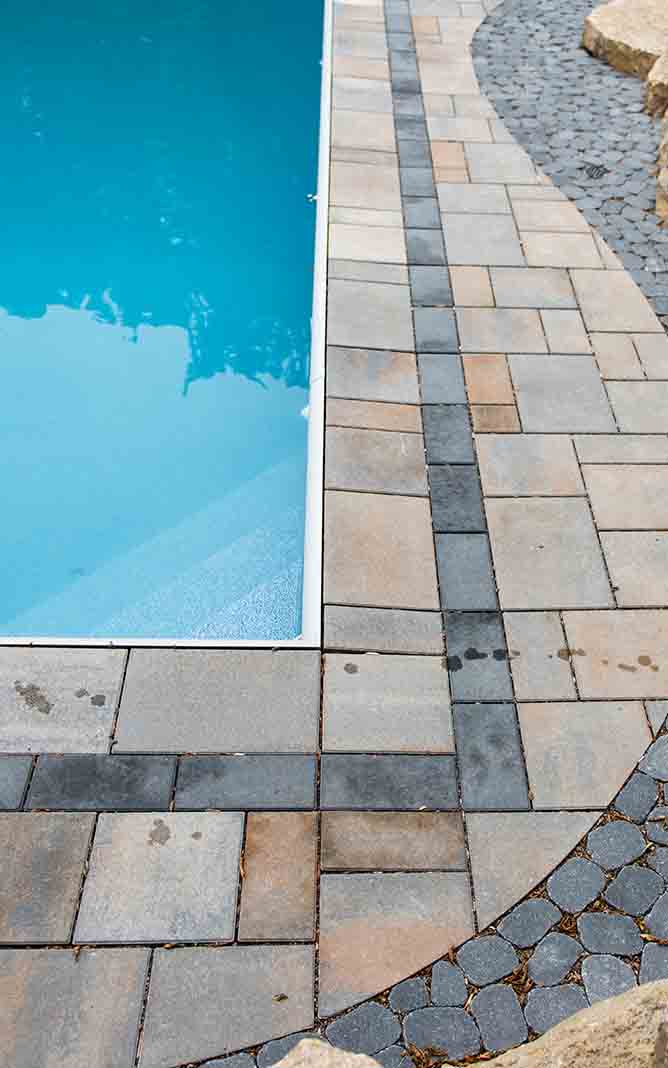
Phase 1: Surface Water Management (The Controlled Pitch)
The first and most critical component of superior water drainage is establishing a deliberate slope on the surface of the entire deck. Water naturally flows downhill, so controlling the pitch is the simplest way to move surface water efficiently away from vulnerable areas.
- The Minimum Slope Rule: The entire paver base is correctly graded with a minimum slope of 1/4 inch per foot of runoff. This pitch is precisely calculated and maintained across the entire deck surface during the base preparation process.
- The Directional Mandate: This controlled pitch must direct water away from the pool and the house.
- Water must be shed away from the pool structure itself to prevent excessive hydrostatic pressure buildup on the shell.
- It must also be pitched away from the home’s foundation to protect the structure from water intrusion and long-term damage.
- Precision Grading: Professionals utilize laser levels and string lines to meticulously grade the sub-base and the final bedding sand layer to ensure this controlled pitch is consistent. This is done before the pavers are even laid, as correcting the pitch after the pavers are set is impossible.
Phase 2: Subsurface Permeability (The Filtering System)
Even with a perfect slope, water will inevitably filter through the joints of the paving stones. Therefore, the paver system itself must be a permeable drainage solution to handle this volume.
- Open Joints and Permeable Sand: The open joints between the paving stones, which are filled with high-performance polymeric sand, allow water to quickly filter down into the sub-base. The sand itself is designed to allow this passage while simultaneously locking the stones together.
- The Compacted Aggregate Sub-Base: Once the water passes through the joints, it enters the compacted aggregate sub-base. This thick layer of crushed stone, which is installed over a geotextile fabric, is highly permeable. It acts like a massive filter, allowing the water to drain and disperse into the surrounding soil instead of becoming trapped beneath the surface.
- Preventing Standing Water: This engineered permeability is what is essential for preventing standing water on the surface and protecting the integrity of the paver pool deck installation. Standing water leads to two major failures: dangerous, slick spots for pedestrians and saturated base material that is vulnerable to freeze-thaw damage.
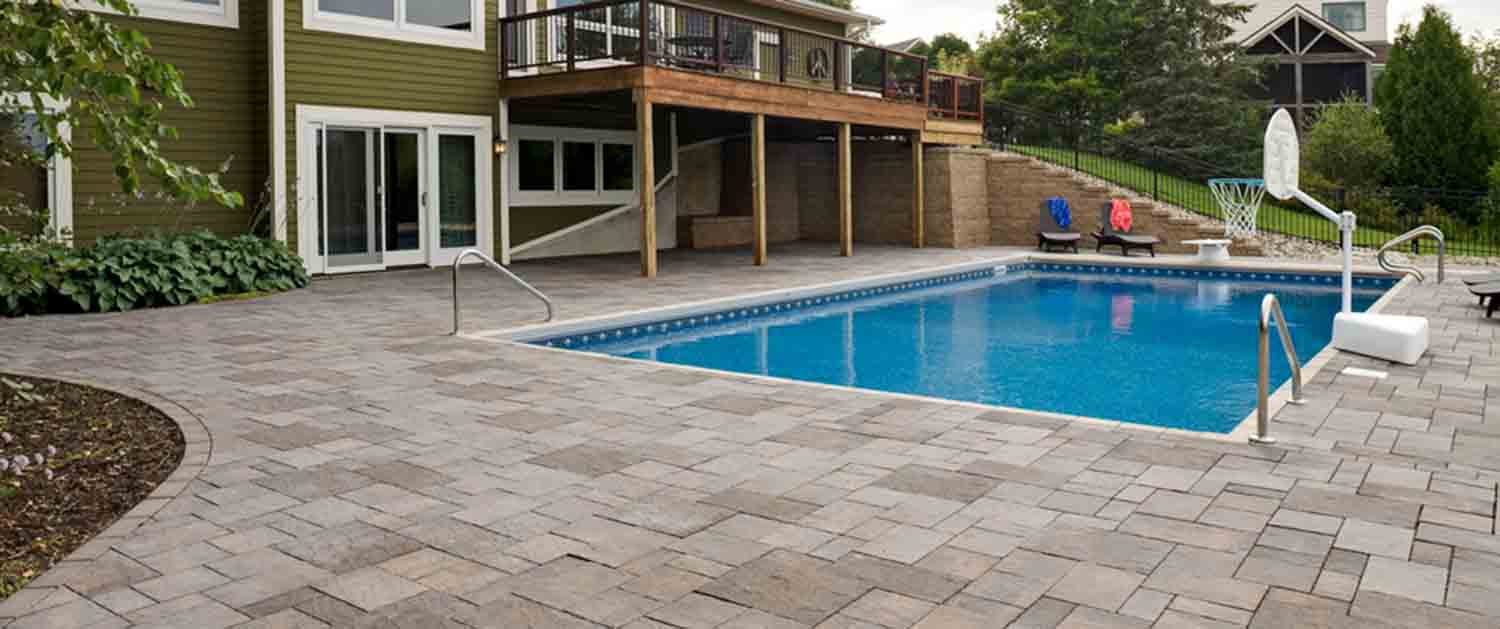
By executing both the surface grading and the subsurface permeability flawlessly, a professional Paver Pool Deck Installation is guaranteed to provide a safe, dry, and long-lasting installation that supports the entire Swimming Pool Installation and complements the surrounding Landscape Design.
Ready to design a stunning Paver Pool Decks that prioritizes superior drainage and safety? Contact Villa Landscapes today to schedule your initial consultation.